
Blowout Preventers: The Ultimate Buyer's Guide to BOP Types, Selection, API Standards & Maintenance
- June 28, 2026
- LKC Equipment and Oilfield Supply
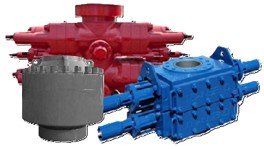
A blowout preventer (BOP) is the single most critical safety system in oil and gas drilling operations, the last line of defense between a well kick and a catastrophic blowout. Designed to prevent the uncontrolled release of formation fluids, a BOP protects personnel, equipment, and the environment during drilling, workover, completion, and well servicing activities.
This comprehensive guide provides everything you need to know about blowout preventers: how they work, the differences between annular and ram types, which specifications matter most, API standards that govern BOP certification, typical price ranges, maintenance requirements, and selection criteria for your specific application.
We pay special attention to the most trusted names in the industry, including Cameron Type-U, Shaffer LXT and LWS, Townsend T-81, Hydril GK annular, and other field-proven BOP systems available from LKC Equipment.
Table of Contents
- What Is a Blowout Preventer?
- Available Blowout Preventer
- How BOPs Work: From Kick to Control
- Types of Blowout Preventers
- BOP Components Explained
- Common Oilfield Applications
- API Standards: Why They Matter
- Available BOP Models from LKC Equipment
- Cameron, Shaffer, Townsend & Hydril BOPs
- Key Selection Criteria
- BOP Price Ranges
- BOP Stack Configurations
- Maintenance & API-Compliant Testing
- Common Mistakes When Selecting a BOP
- Frequently Asked Questions
- Ready to Buy?
What Is an Oilfield Blowout Preventer?
A blowout preventer (BOP) is a large, specialized high-pressure safety valve installed at the wellhead to control, seal, and monitor oil and gas wells. Its sole purpose is to prevent the uncontrolled release of formation fluids — crude oil, natural gas, or other well fluids into the atmosphere or surrounding environment.
What causes a blowout? During normal drilling, the hydrostatic pressure of drilling mud keeps formation fluids in place. When that primary barrier fails due to insufficient mud weight, lost circulation, swabbing, or formation breakdown a kick occurs: formation fluids enter the wellbore. If the kick is not detected and controlled quickly, it escalates into a blowout, a disaster that can result in loss of life, environmental catastrophe, destruction of equipment, and billions in liability.
The BOP is the final safety net. Every other well control measure (mud weight, casing design, cement) can fail. No drilling operation proceeds without verified BOP reliability.
Available Blowout Preventers
LKC Equipment supplies ram style and annular blowout preventers for oil and gas drilling, workover, completion, and pressure control applications. Our inventory includes Cameron, Townsend, Shaffer, and Hydril systems, along with replacement ram blocks, packers, and top seals for a variety of well control requirements.
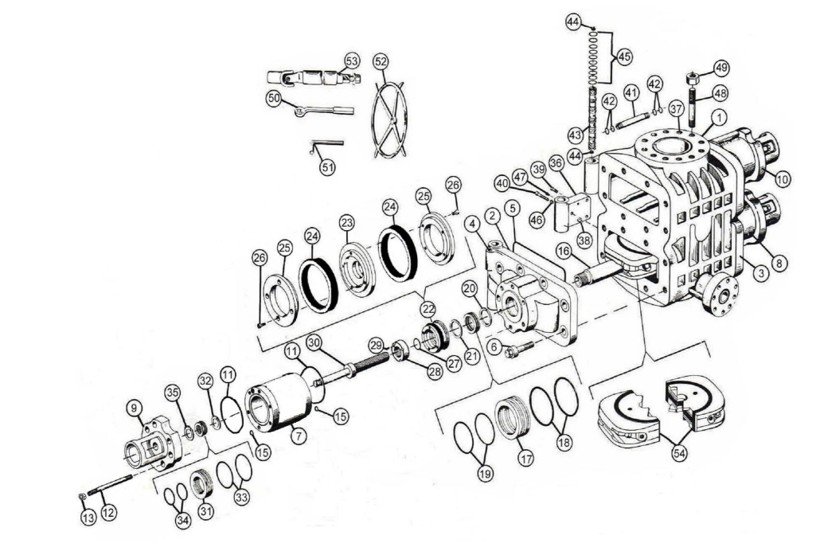
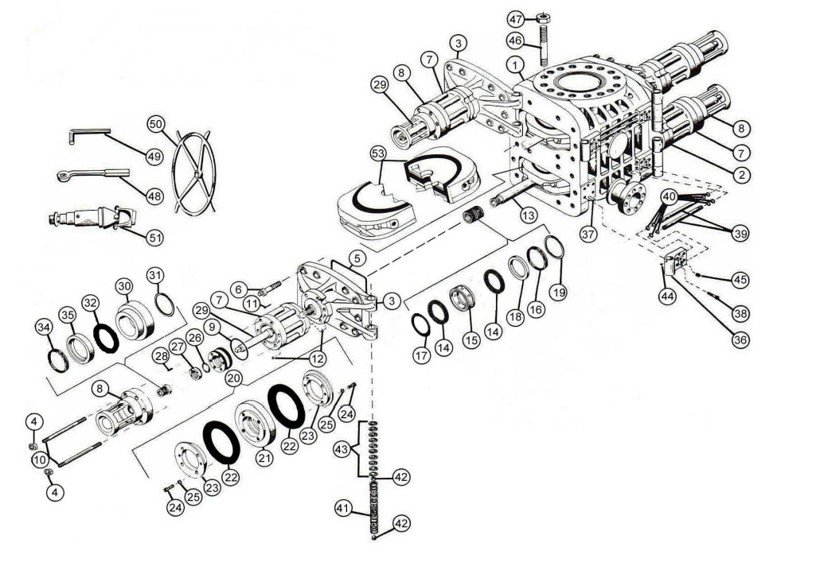
Ram Style Blowout Preventers
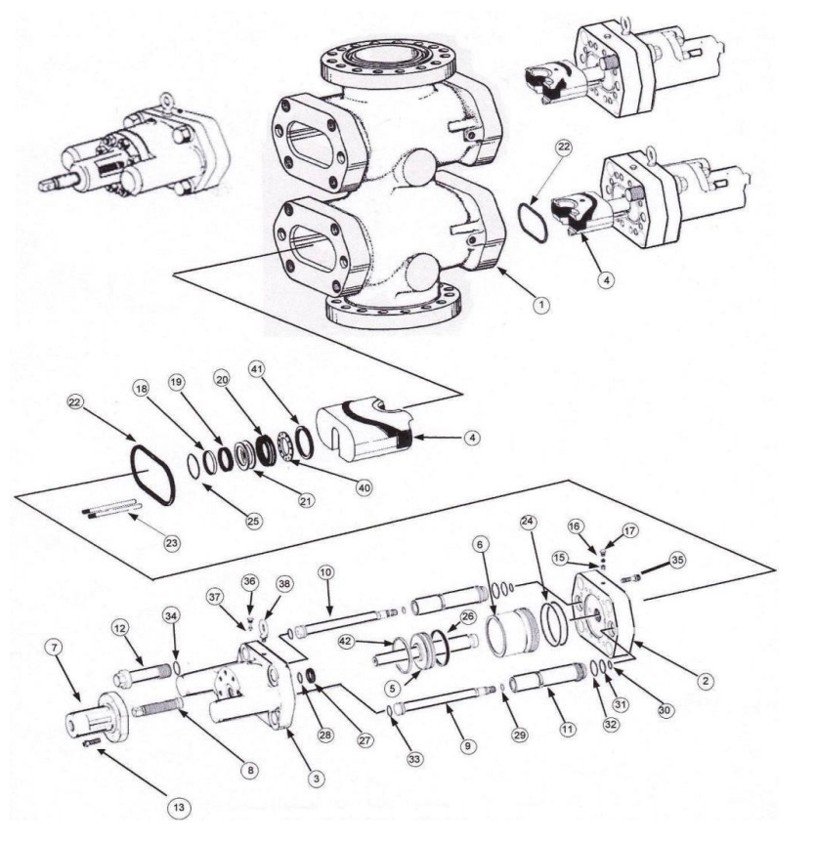
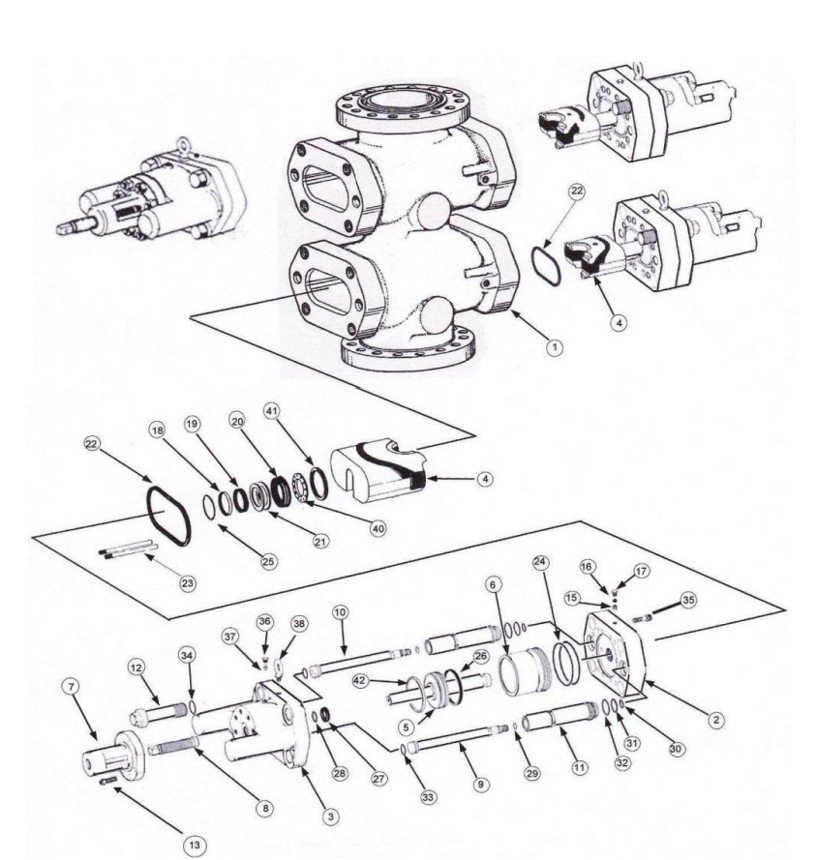
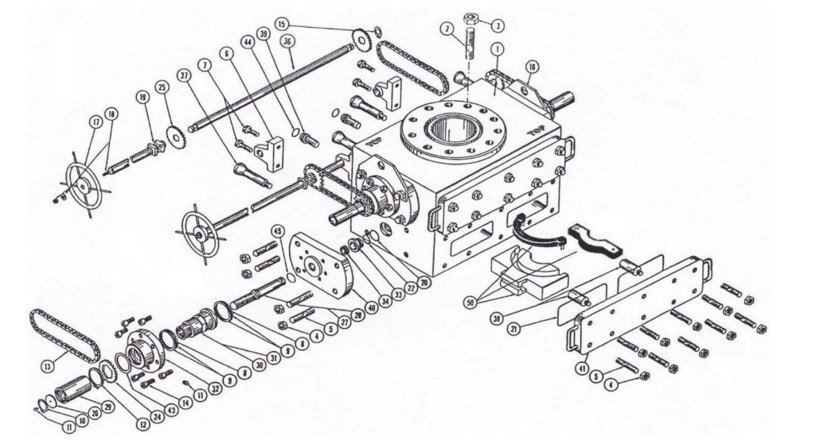
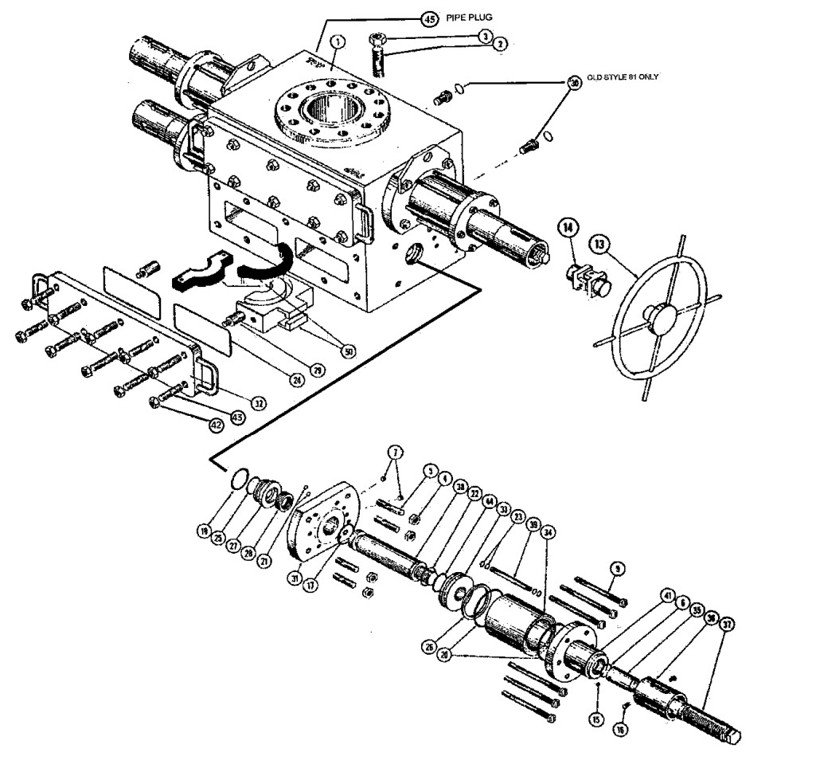
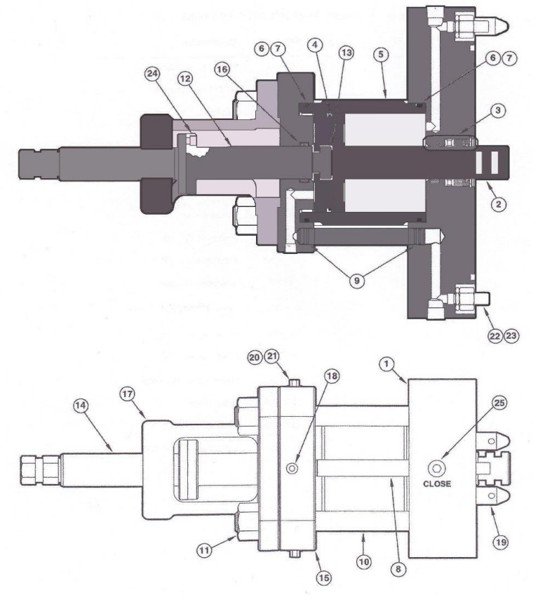
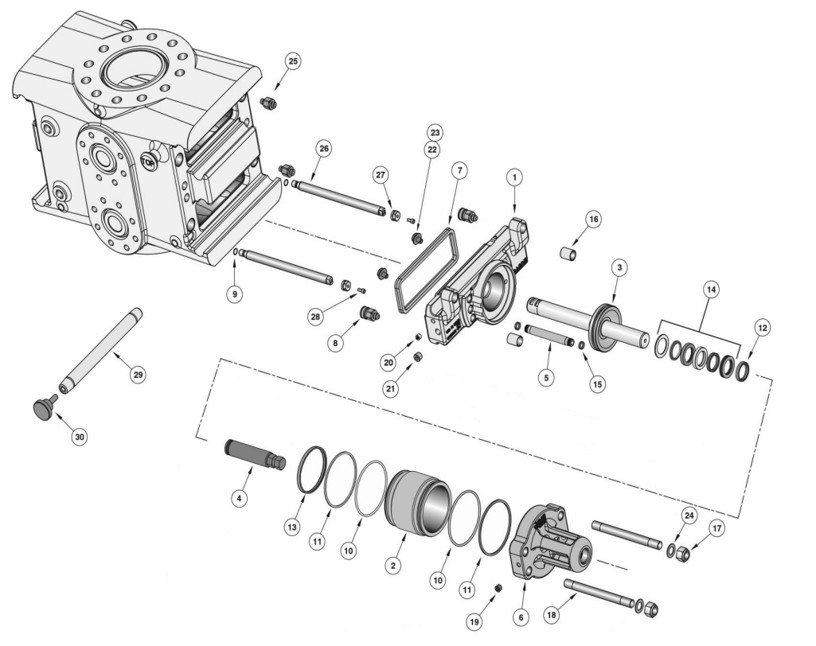
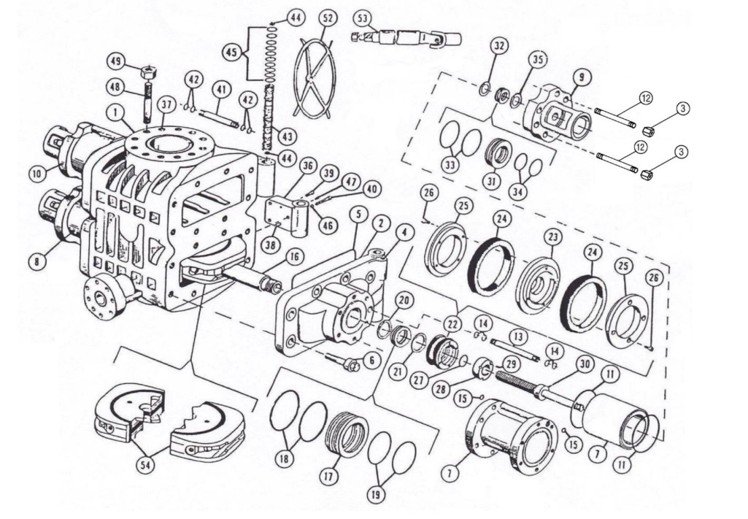
Annular Blowout Preventers
How BOPs Work: From Kick to Control
- Normal drilling: Drilling mud is circulated down through the drill pipe and up the annulus to maintain hydrostatic pressure on the formation.
- Kick occurs: If hydrostatic pressure drops below formation pressure, an influx of gas, oil, or water enters the wellbore.
- Kick detected: Through pit gain, flow rate increase, or drilling break, the rig crew identifies the problem.
- BOP activated: The BOP is closed to seal the well. Rams, seals, and valves rapidly close the annular space around the drill pipe or seal an open hole.
- Well control regained: Heavier kill-weight mud is circulated through the kill line to restore hydrostatic overbalance.
- Operations resume: Once stabilized, the BOP is opened and drilling continues.
Types of Blowout Preventers
There are two primary types of blowout preventers. Most well control systems incorporate both in a stacked configuration for maximum safety and redundancy.
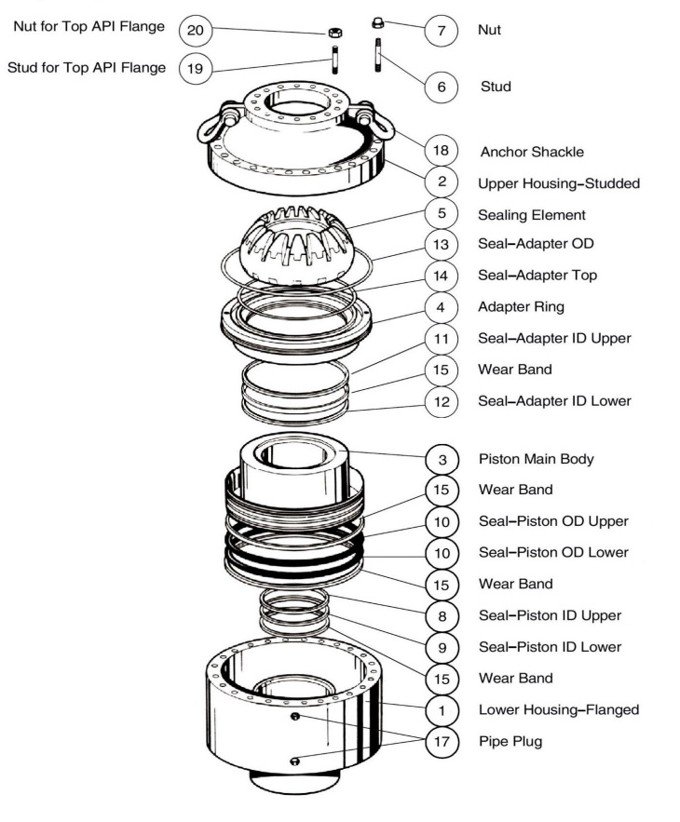
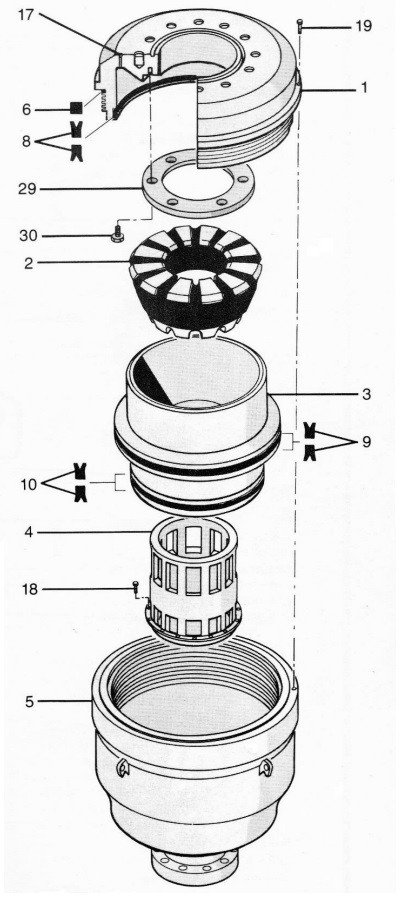
Annular Blowout Preventers
An annular BOP (sometimes called a “spherical BOP” or “Hydril-type”) uses a donut-shaped elastomer packing element that is mechanically squeezed inward by a hydraulic piston to seal around pipe, casing, or an open hole.
Key characteristics:
- Versatile sealing: Can seal around any tubular shape, open hole, kelly flats, and tool joints
- Stripping capability: Allows pipe movement through the closed preventer under pressure
- Rapid response: Quick to activate during a kick
- Limitation: Requires more fluid volume and longer closing time compared to ram-type preventers
Popular models:
Ram Blowout Preventers
Ram BOPs are large bore valves that use opposing pistons or plungers to seal the wellbore, operating analogously to a gate valve.
Ram subtypes:
Ram Type | Function | Best For |
Pipe Rams | Seal around specific drill pipe sizes using sealing elements that fit around the tubular body | Standard drilling operations |
Blind Rams | Seal the wellbore when no drill string is present | Open-hole situations |
Shear Rams | Cut through drill pipe in emergencies to completely seal the wellbore | Emergency well control |
Variable Bore Rams (VBR) | Feature more complex sealing elements that allow sealing around a wide range of pipe sizes | Operations with multiple pipe sizes |
BOP Components Explained
Understanding BOP components is essential for proper selection and maintenance. Below are the key parts buyers search for when ordering replacements.
Component | Function |
BOP Body | Main housing containing sealing mechanisms; forged from high-strength AISI 4130 steel |
Ram Blocks | Interchangeable sealing elements that close around or shear through drill pipe |
Ram Packers | Elastomeric sealing component within ram blocks that creates the pressure-tight seal |
Top Seals | Critical sealing components maintaining pressure integrity between bonnet and body |
Carrier Blocks | Support structures holding ram blocks in position |
Packing Element (Annular) | Donut-shaped elastomeric sealing device used in annular BOPs |
Flex Packers | Provide sealing flexibility across a range of pipe sizes |
VBR Packers | Variable bore ram packers for multiple pipe sizes |
Shear Rams | Cut through drill pipe in emergencies |
Slip Rams | Secure and hang off drill pipe |
Stripper Rams | Maintain seal while stripping pipe |
Snubbing Rams | Specialized rams for snubbing operations |
Common Oilfield Applications
Blowout preventers are essential across virtually every phase of oil and gas operations.
Application | BOP Recommendation |
Offshore Drilling | Subsea BOP stacks with dual annular and ram preventers for high-risk environments |
Onshore Workovers | Compact annular BOPs ideal for snubbing and well control during maintenance |
HPHT Wells | BOPs with advanced elastomers and real-time monitoring systems |
Drilling Operations | Full BOP stack with annular + multiple ram BOPs |
Completion Operations | Pressure control during final phases of well construction |
Well Intervention | Emergency and planned well control operations |
Snubbing Operations | Specialized well control during pipe movement under pressure |
Because different wells and operations require different specifications, buyers typically search for BOPs by brand, model number, bore size, pressure rating, or ram type.
API Standards: Why They Matter
API-certified BOPs are non-negotiable for regulatory compliance and operational safety.
Key API Standards for BOPs
Standard | Scope |
API Spec 16A | Defines requirements for performance, design, materials, testing, inspection, welding, marking, handling, storing, and shipping of drill-through equipment including ram BOPs, ram blocks, packers, top seals, annular BOPs, and annular packing units |
API Std 53 | Outlines requirements for blowout prevention equipment systems used in drilling and well-control operations |
API Std 16AR | Establishes requirements for repair and remanufacture of ram BOPs, annular BOPs, and associated components |
API Q1 | Quality management system requirements for manufacturing organizations |
Benefits of API-Certified BOPs
- Guaranteed Performance: API 16A standards ensure rigorous testing for pressure integrity and sealing
- Global Acceptance: API certification is recognized worldwide, simplifying procurement for international projects
- Maintenance Compatibility: API-compliant designs simplify part replacement and repairs
- Regulatory Compliance: Meets requirements for drilling operations worldwide
Available Blowout Preventer Models from LKC Equipment
LKC Equipment supplies a wide range of ram style and annular blowout preventers from leading manufacturers. Our inventory includes complete BOP assemblies as well as replacement components.
Ram Style Blowout Preventers
Model | Size | Pressure Rating | Components Available | |
7 1/16″ | 3M-15M | Ram blocks, packers, top seals | ||
11″ | 3M-10M | Ram blocks, packers, top seals | ||
7 1/16″ | 3M Manual | Ram blocks, packers, top seals | ||
7 1/16″ | 5M Hydraulic | Ram blocks, packers, top seals | ||
7 1/16″ | 5M | Ram blocks, packers, top seals | ||
7 1/16″ | 5M | Ram blocks, packers, top seals | ||
7 1/16″ | 5M | Ram blocks, packers, top seals | ||
11″ | 3M | Ram blocks, packers, top seals | ||
11″ | 5M | Ram blocks, packers, top seals | ||
Annular Blowout Preventers | Components Available |
Ram blocks, packers, top seals | |
Ram blocks, packers, top seals |
View each product for complete specifications and availability.
Cameron, Shaffer, Townsend & Hydril BOPs: The Industry Standards
Cameron Type-U BOP
The Cameron Type-U is one of the most widely used ram-type BOPs in the world. Known for reliability and ease of maintenance, the Type-U is designed so that hydraulic pressure opens and closes the bonnets, enabling quick and easy ram change-out.
Key Specifications:
- Bore size range: 7 1/16″ to 21 1/4″
- Working pressure: 2,000 psi to 15,000 psi
- Hydraulically operated bonnet opening
- Forged body from 4130 material
- Internal H₂S trim as standard
- Rams and seal kits interchangeable with OEM
Shaffer BOPs (LXT, LWS, Chasovoy)
Shaffer has been an innovator in BOP technology for over a century.
- Shaffer LWS: A rugged, reliable manual lock ram BOP that is easily serviced in the field. Available in 7 1/16″, 11″, and 13 5/8″ sizes.
- Shaffer LXT: Advanced design featuring enhanced safety and operational capabilities. Ram assemblies available for bore sizes from 7 1/16″ to 21 1/4″.
- Shaffer Chasovoy: Specialized configuration offering reliable performance in demanding well control applications.
Townsend T-81 BOP
The Townsend T-81 is a well-established ram BOP design commonly used in workover and well servicing operations. Available in both manual and hydraulic configurations at 3,000 psi and 5,000 psi ratings.
Hydril GK Annular BOP
The Hydril GK annular BOP is one of the most recognized annular BOPs in the industry. Known for its robust design and reliable sealing performance, the GK series features only two moving parts, a long piston design, and a conical bowl design that makes it simple, reliable, and efficient.
Available Configurations:
- 7 1/16″ 5K
- 11″ 5K
- 11″ 10K
- 13 5/8″ 10K
- 16 3/4″ 3K
- 16 3/4″ 5K
Cameron, Shaffer, Townsend & Hydril BOPs: The Industry Standards
Cameron Type-U BOP
The Cameron Type-U is one of the most widely used ram-type BOPs in the world. Known for reliability and ease of maintenance, the Type-U is designed so that hydraulic pressure opens and closes the bonnets, enabling quick and easy ram change-out.
Key Specifications:
- Bore size range: 7 1/16″ to 21 1/4″
- Working pressure: 2,000 psi to 15,000 psi
- Hydraulically operated bonnet opening
- Forged body from 4130 material
- Internal H₂S trim as standard
- Rams and seal kits interchangeable with OEM
Shaffer BOPs (LXT, LWS, Chasovoy)
Shaffer has been an innovator in BOP technology for over a century.
- Shaffer LWS: A rugged, reliable manual lock ram BOP that is easily serviced in the field. Available in 7 1/16″, 11″, and 13 5/8″ sizes.
- Shaffer LXT: Advanced design featuring enhanced safety and operational capabilities. Ram assemblies available for bore sizes from 7 1/16″ to 21 1/4″.
- Shaffer Chasovoy: Specialized configuration offering reliable performance in demanding well control applications.
Townsend T-81 BOP
The Townsend T-81 is a well-established ram BOP design commonly used in workover and well servicing operations. Available in both manual and hydraulic configurations at 3,000 psi and 5,000 psi ratings.
Hydril GK Annular BOP
The Hydril GK annular BOP is one of the most recognized annular BOPs in the industry. Known for its robust design and reliable sealing performance, the GK series features only two moving parts, a long piston design, and a conical bowl design that makes it simple, reliable, and efficient.
Available Configurations:
- 7 1/16″ 5K
- 11″ 5K
- 11″ 10K
- 13 5/8″ 10K
- 16 3/4″ 3K
- 16 3/4″ 5K
Key Selection Criteria for a Blowout Preventer
Selecting the correct BOP starts with understanding the well conditions and operational requirements. The following factors should be evaluated before making a purchase.
1. Pressure Rating
Choose BOPs rated for maximum well pressure. Common ratings include 3,000 psi, 5,000 psi, 10,000 psi, and 15,000 psi. High-pressure wells may require 10,000-psi-rated or higher stacks.
Key consideration: BOP testing pressure is typically 1.5 times the rated working pressure.
2. Bore Size
Match the BOP’s inner diameter to your drill string. Common sizes range from 7 1/16″ (for standard drilling) to 26 3/4″ (for large casing operations).
3. Ram Type Selection
Choose the appropriate ram type based on your operation:
- Pipe Rams: For sealing around specific pipe sizes during drilling
- Blind Rams: For sealing the wellbore when no tools are present
- Shear Rams: For emergency situations requiring pipe cutting
- Variable Bore Rams: For operations involving multiple pipe sizes
4. API Compliance
API-certified BOPs are non-negotiable for regulatory compliance and operational safety. Only purchase from manufacturers with API 16A or Q1 approval.
5. Material and Durability
Look for AISI 4130 steel construction and NACE MR 0175-compliant materials for H₂S resistance in sour service environments.
6. Temperature Class
Ensure compatibility with downhole conditions. API-certified BOPs like the T-20 class operate safely in extreme temperatures.
7. Actuation Type
Choose between hydraulic, manual, or electric actuation based on operational requirements.
BOP Price Ranges
Understanding BOP costs helps with budget planning. Prices vary significantly based on type, size, pressure rating, and configuration.
BOP Type | Working Pressure | Typical Price Range (USD) |
Single Ram BOP | 3,000–5,000 psi | $10,000 – $40,000 |
Double Ram BOP | 5,000–10,000 psi | $40,000 – $120,000 |
Annular BOP | 5,000–10,000 psi | $80,000 – $250,000 |
Subsea BOP Stack | 10,000–15,000 psi | $500,000 – $2,000,000+ |
Key factors affecting price:
- Working pressure and bore size
- Type (annular vs ram vs shear ram configuration)
- Control system (hydraulic/electric-hydraulic) and accumulator package
- Standards/certification and testing requirements
- Materials for sour service (H₂S) and corrosion protection
- Spares, tooling, and delivery lead time
Note: Prices vary depending on configuration, material, and certification requirements.
BOP Stack Configurations
A BOP stack typically consists of multiple BOPs stacked on top of each other for redundancy.
Typical stack arrangement (top to bottom):
- Annular BOP (top): Provides flexible sealing around any tubular and rapid response
- Single or double ram BOP (middle): Provides positive mechanical sealing
- Additional ram BOP (if required): For redundancy
- Wellhead connector (bottom): Connects to the wellhead
Operational sequence: Annular BOPs are typically used first when a kick is observed, as they can seal while drilling continues. Ram BOPs serve as a secondary measure if hydrostatic pressure remains unbalanced.
BOP Replacement Parts & Components
Maintaining critical BOP components is essential for reliable pressure control, equipment performance, and operational safety. LKC Equipment supplies replacement components for Cameron, Shaffer, Townsend, Hydril, and other OEM well control systems.
Available blowout preventer parts include:
Component | Application |
Ram Blocks | Sealing mechanism within ram style BOPs |
Ram Packers | Elastomeric seals for ram blocks |
Top Seals | Maintain pressure integrity between bonnet and body |
Carrier Blocks | Support ram blocks in position |
Flex Packers | Sealing flexibility across pipe sizes |
VBR Packers | Variable bore ram packers |
Shear Rams | Emergency pipe cutting |
Slip Rams | Secure and hang off drill pipe |
Stripper Rams | Maintain seal while stripping pipe |
Snubbing Rams | Specialized snubbing operations |
Maintenance & API-Compliant Testing
Proper maintenance extends BOP life and ensures safe operation. API standards establish minimum requirements for BOP inspection, testing, and maintenance.
Pre-Operation Checklist
- Verify BOP is properly installed and connected to the wellhead
- Check hydraulic fluid levels and system pressure
- Inspect all seals, packers, and ram blocks for wear or damage
- Test BOP function (open and close) before operations
- Verify kill line and choke manifold are properly configured
During Operation
- Monitor hydraulic system pressure continuously
- Conduct regular function tests as per API RP 53 requirements
- Document all BOP operations and test results
- Maintain communication between driller and BOP operator
Scheduled Maintenance Intervals
Interval | Maintenance Activity |
Daily | Check hydraulic fluid levels and inspect for leaks |
Weekly | Function test all BOP components |
Monthly | Inspect ram blocks and packers for wear |
Per API 16AR | Repair and remanufacture of ram BOPs, annular BOPs, and packing units |
Per API RP 53 | Comprehensive inspection and testing as per requirements |
Safety Reminders
- Always wear appropriate personal protective equipment (PPE)
- Never bypass or disable BOP safety systems
- Maintain proper documentation of all inspections and tests
- Ensure all personnel are trained in BOP operation and emergency procedures
Common Mistakes When Selecting a BOP
- Choosing a BOP with insufficient pressure rating for the well
- Selecting the wrong bore size for the tubular string
- Failing to verify API compliance and certification
- Overlooking temperature and material requirements
- Ordering replacement parts without confirming the exact model number
- Ignoring the need for redundant BOP systems in high-risk wells
- Not considering future well conditions or potential changes in operation
Global Blowout Preventer Market at a Glance
Understanding the market landscape helps with procurement planning and investment decisions.
- Market Size: Estimated at US$6.4 Billion in 2025, projected to reach US$7.8 Billion by 2032
- Growth Rate: CAGR of 3.0% over the analysis period
- Primary Drivers: Increasing drilling activity, aging well intervention, stringent safety regulations, and growing emphasis on well integrity
- Leading Regions: North America remains the largest market, driven by shale operations and high rig counts. The Middle East and Asia-Pacific are significant growth markets.
- Technology Trends: Digital monitoring, real-time diagnostics for predictive maintenance, and customized aftermarket solutions
Frequently Asked Questions
What is the difference between an annular BOP and a ram BOP?
An annular BOP seals around any tubular using an elastomeric packing element and is typically installed at the top of the stack. Ram BOPs use opposing pistons to seal around specific pipe sizes, close an open wellbore, or shear through pipe in emergencies.
What are the four types of ram BOPs?
Pipe rams, blind rams, shear rams, and variable bore rams (VBR).
What PSI rating do I need?
Choose BOPs rated for maximum well pressure. Common ratings include 3,000 psi, 5,000 psi, 10,000 psi, and 15,000 psi.Are Cameron Type-U BOPs still the industry standard
Yes. The Cameron Type-U is one of the most widely used ram-type BOPs in the world, known for reliability, ease of maintenance, and interchangeable parts.Why do buyers search by brand and model number
Replacement parts (ram blocks, packers, top seals, seals) are brand- and model-specific. Using the correct brand and model ensures proper fit, sealing, and safe operation.What API standards apply to BOPs?
API Spec 16A covers design, materials, testing, and inspection requirements. API Std 53 covers installation and testing requirements. API Std 16AR covers repair and remanufacture.How much does a BOP cost
Prices range from approximately $10,000 for small land rig single ram BOPs to over $2 million for deepwater subsea BOP stacks.How often should BOPs be inspected?
Inspection frequency should follow API RP 53 requirements, including daily checks, weekly function tests, and comprehensive inspections at regular intervals based on operating conditions and regulatory requirements.
Ready to Buy? How to Get the Right BOP for Your Operation
Selecting the correct BOP depends on pressure requirements, bore size, ram type, rig compatibility, and application. LKC Equipment carries a wide range of field-proven blowout preventers from Cameron, Shaffer, Townsend, Hydril, and other leading manufacturers.
To get an accurate recommendation and quote, provide:
Information Needed | Why It Matters |
Application (drilling, workover, completion, well intervention, etc.) | Determines which BOP type is appropriate |
Required pressure rating | Ensures BOP can handle maximum well pressure |
Bore size required | Must match your drill string diameter |
Ram type needed (pipe, blind, shear, or VBR) | Determines sealing capability |
Tubing or casing size | Ensures proper fit |
Existing brand and model number (if replacing) | Guarantees compatibility |
LKC Equipment supplies blowout preventers, replacement ram blocks, packers, top seals, and related well control equipment for drilling and well servicing operations.
Contact LKC Equipment today to discuss your BOP requirements.
This guide is provided for reference purposes only. Always consult your equipment manual or a qualified supplier before ordering replacement parts or operating heavy equipment.
BOP selection and operation should always comply with applicable API standards and regulatory requirements.
Request an enquiry
Ready to Work Together? Build a project with us!