
Power Swivels: Buyer’s Guide to Selection, Specs, Maintenance, and Bowen Models
- June 12, 2026
- LKC Equipment and Oilfield Supply
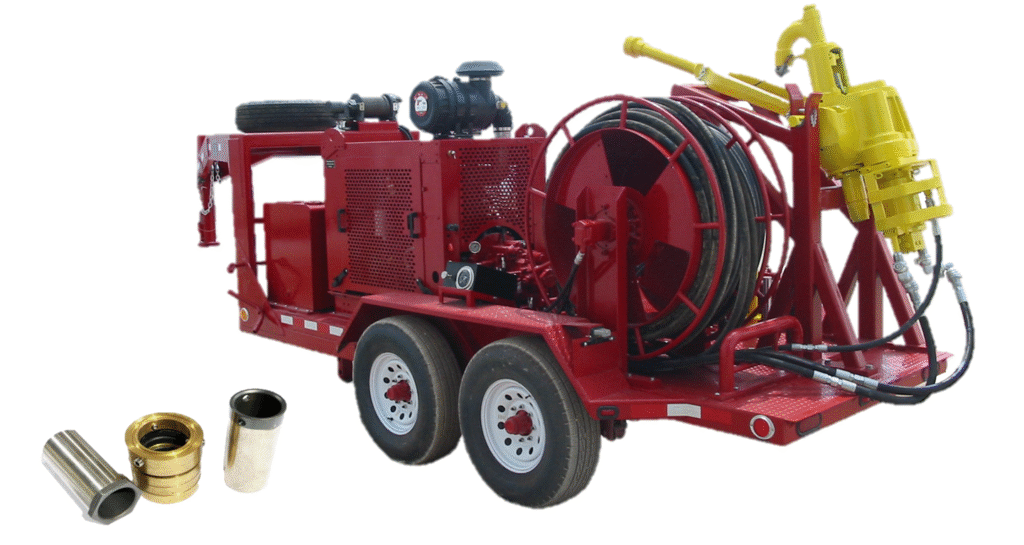
Power swivels are used in drilling, workover, fishing, milling, casing running, and well intervention operations where controlled rotation and fluid circulation are required. This guide explains how power swivels work, how to choose the right model, which specifications matter most, and how commonly used models such as the Bowen S45, Bowen 2.5, and Bowen 3.5 compare for different applications.
Whether you’re evaluating equipment for a drilling contractor, workover rig, or well servicing operation, understanding load capacity, torque, circulation requirements, and rig compatibility is essential before making a purchasing decision.
Table of Contents
- What Is a Power Swivel?
- Power Swivel Components
- Common Applications
- Benefits of Hydraulic Power Swivels
- Available Models
- Bowen Power Swivels
- How to Choose the Right Power Swivel
- Power Swivel vs Top Drive
- Maintenance & Safety
- Frequently Asked Questions
What Is an Oilfield Power Swivel?
A power swivel is a hydraulically or electrically powered rotating device that is suspended in a rig’s derrick. Its primary job is to rotate the drill pipe, tubing, or casing string while simultaneously allowing drilling fluids to be circulated downhole. This dual capability makes it a portable, powerful, and highly efficient alternative to traditional rotary tables and kelly drives.
In simple terms, a power swivel eliminates the need for a rotary table on the rig floor. Instead, rotation is delivered from above, directly through the tubular string, which significantly reduces manual handling, speeds up connections, and improves safety.
How it works:
- A hydraulic motor (driven by a diesel engine and hydraulic pump) generates rotational force.
- That force is transmitted through a gear train to a drive stem – a short tubular section with a threaded connection.
- The drill string is attached to this stem. As the stem rotates, the entire string rotates.
- A central bore through the swivel allows drilling mud or other fluids to be pumped downhole without interruption, even while rotating.
Modern power swivels also incorporate a removable bearing core that absorbs the weight of the drill string and the torque of rotation. In high-quality designs, this core can be replaced relatively easily, significantly reducing repair costs and downtime.
Power Swivel Components
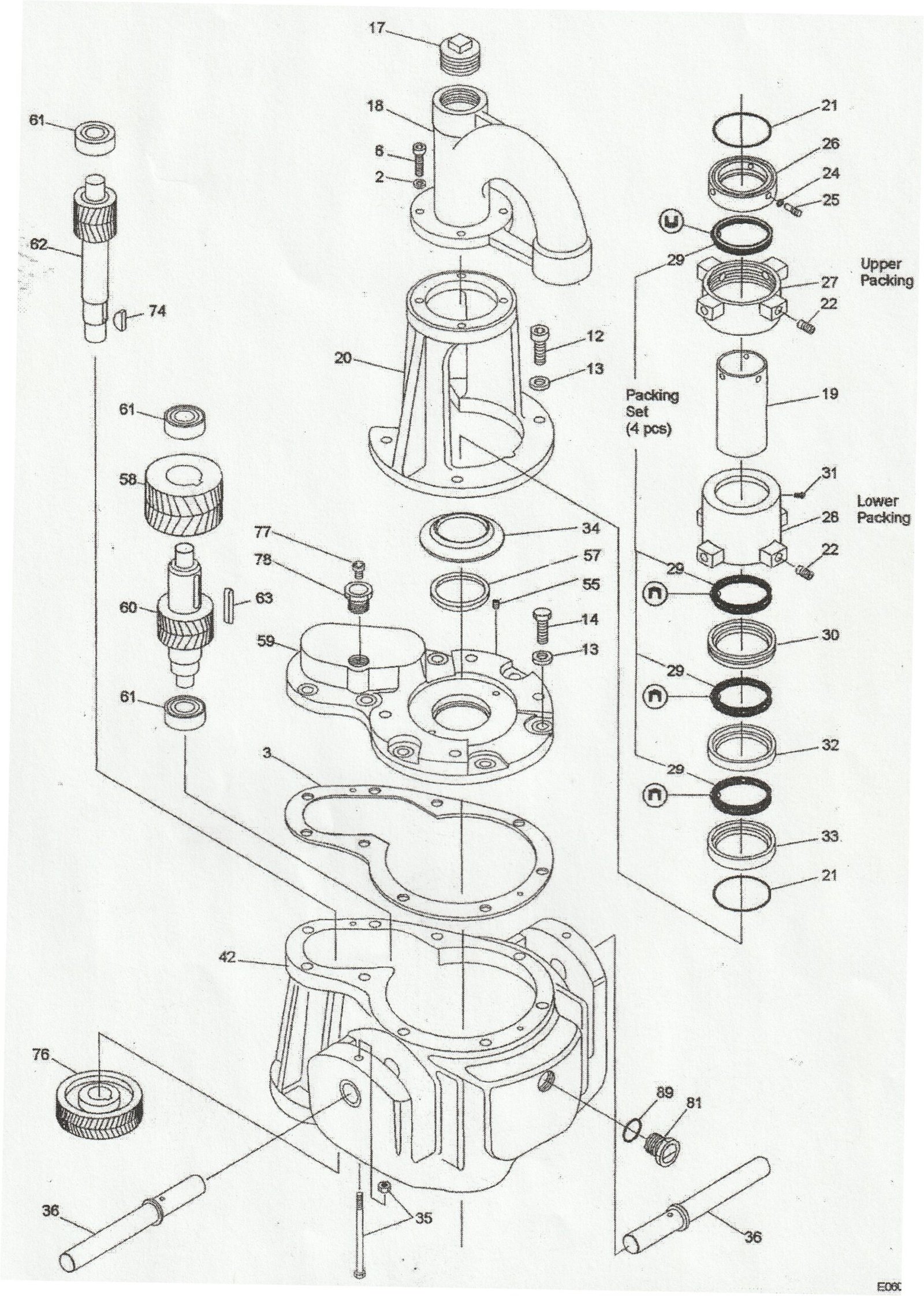
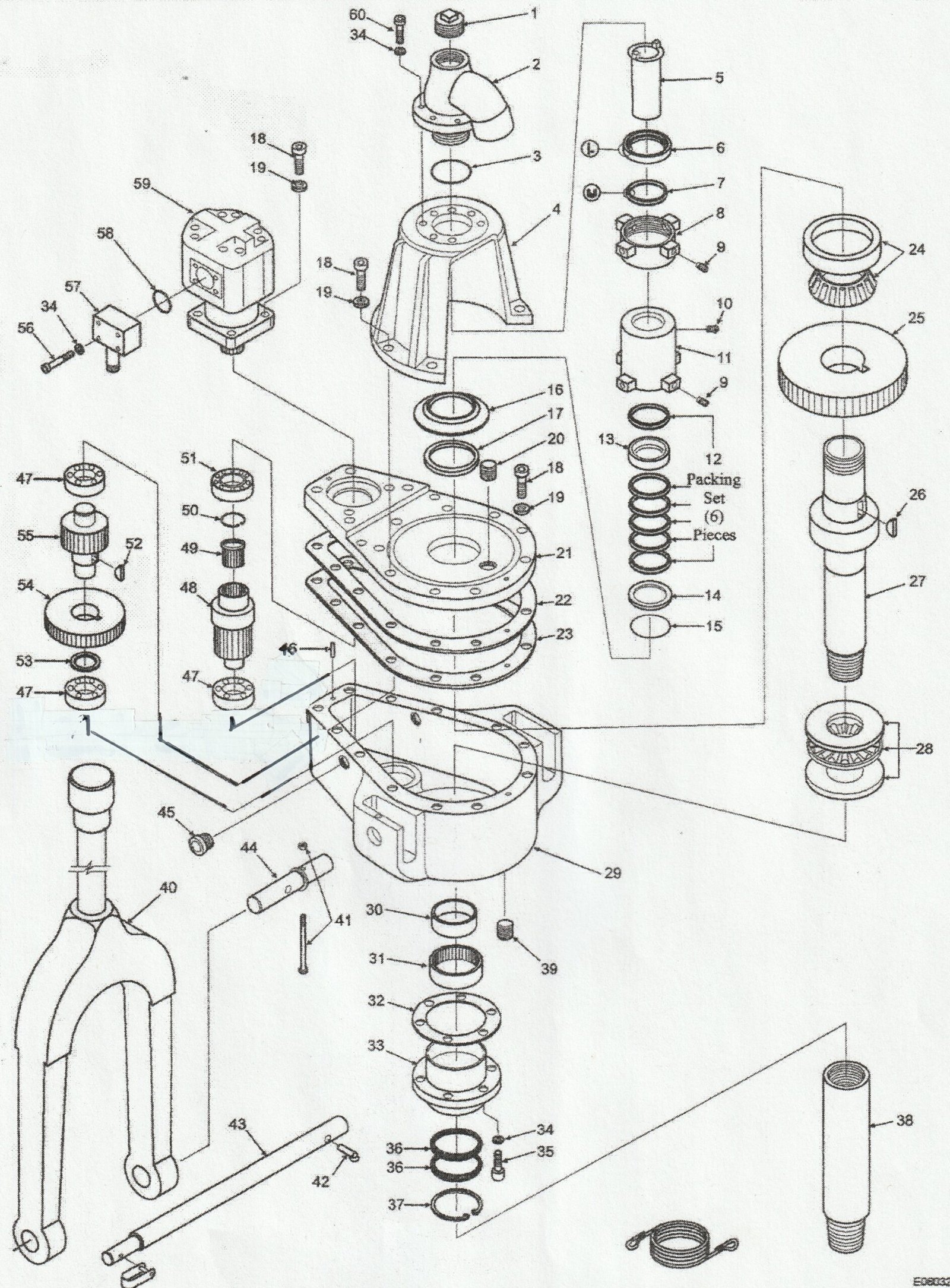
A power swivel consists of several critical components that work together to provide rotation, load support, and fluid circulation during drilling and workover operations.
Hydraulic Motor:
The hydraulic motor generates rotational power by converting hydraulic pressure into mechanical movement. It is the primary source of torque for the swivel.
Gearbox:
The gearbox transfers power from the hydraulic motor to the drive stem while reducing speed and increasing torque as required for drilling, fishing, and milling operations.
Bearing Assembly:
The bearing assembly supports the weight of the tubular string and absorbs both axial and radial loads during operation. In many modern designs, the bearing assembly can be removed and serviced separately, reducing maintenance costs and downtime.
Drive Stem:
The drive stem is the rotating shaft that connects the power swivel to the drill pipe, tubing, or casing string. As the drive stem rotates, the connected tubular string rotates as well.
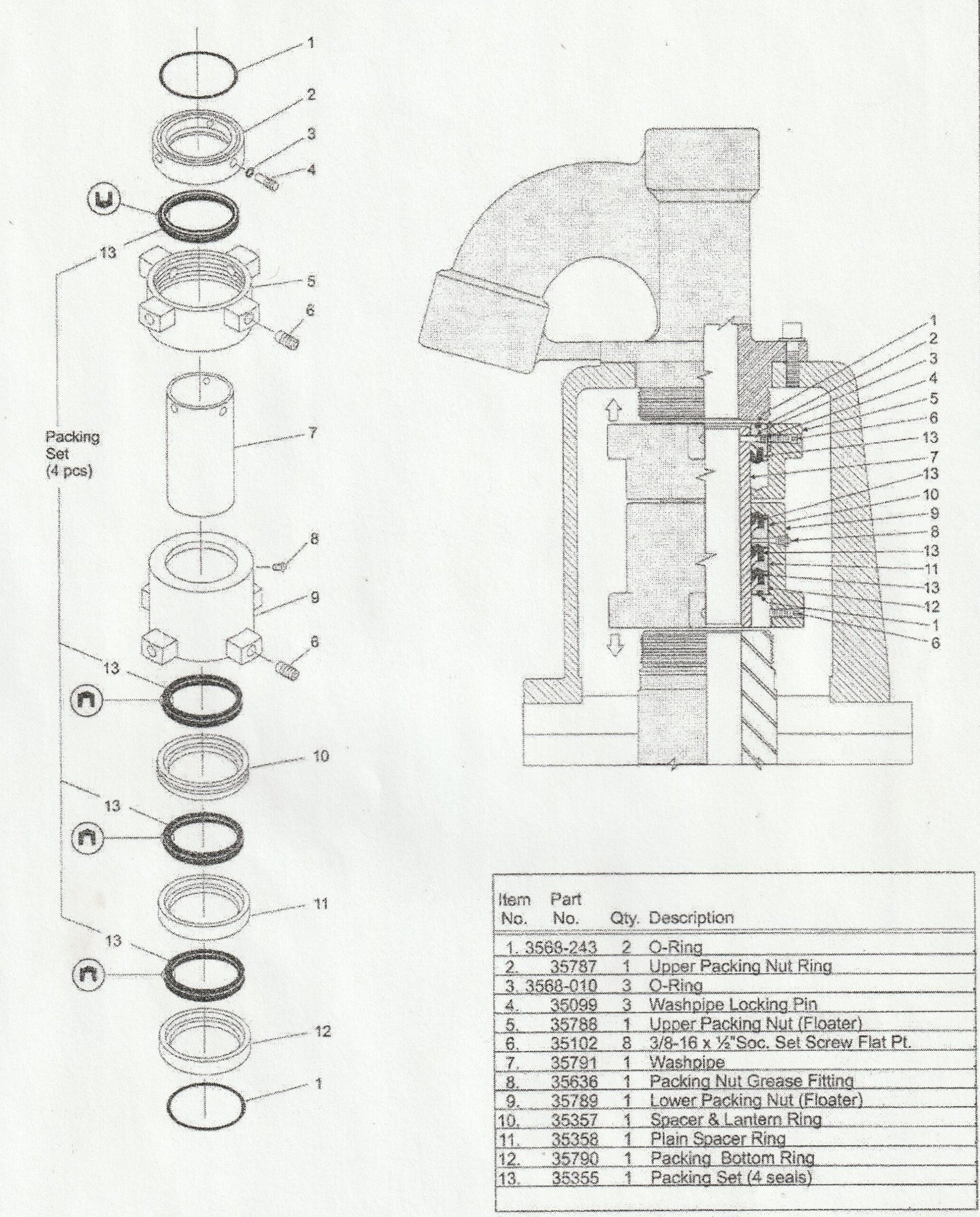
Washpipe Assembly:
The washpipe allows drilling fluid or other circulating fluids to pass through the swivel while the drive stem continues to rotate. This enables uninterrupted circulation during operations.
Gooseneck:
The gooseneck is the curved pipe connection mounted on the swivel housing that directs drilling fluid into the washpipe and central bore.
Torque Rein:
The torque rein prevents the swivel body from rotating while allowing rotational force to be transferred into the drill string. Proper installation and tensioning are essential for safe operation.
Common Oilfield Applications
Power swivels are not limited to one type of operation. Their versatility makes them a critical asset across a wide range of drilling and well servicing activities.
- Drilling Operations: Used for both conventional and directional drilling, particularly on smaller rigs or in areas where space is limited.
- Workover Rigs: The most common application. A workover power swivel allows operators to pull, repair, and replace production tubing efficiently while maintaining precise control over rotation.
- Well Servicing & Completions: Running completion strings, perforating, and setting packers become safer and faster with a power swivel.
- Fishing Operations: Rotating the string while trying to catch and retrieve lost tools or debris from the wellbore is vastly more effective with a power swivel.
- Milling Applications: Grinding away downhole obstructions (such as cement, plugs, or packers) requires consistent, high-torque rotation – a task power swivels excel at.
- Casing Running: Many operators now use power swivels to rotate casing strings while running them in the hole, reducing the risk of sticking.
- Well Cleanouts & Intervention: Any operation requiring circulation while rotating, such as sand cleanouts or scale removal, benefits from a power swivel.
Because different rigs and well conditions require different specifications, buyers typically search for power swivels by brand, model number, torque capacity, load rating, or required tubing/casing size.
Benefits of Using a Hydraulic Power Swivel
Compared to traditional rotary table and kelly drive systems, modern hydraulic power swivels offer numerous operational and safety advantages.
- Eliminates Dangerous Spinning Chains and Tongs: Historically, manual spinning chains and tongs were used to make and break connections, which posed serious injury risks. Power swivels remove the need for these manual processes.
- Smooth, Shock-Free Torque: Hydraulic drive systems deliver variable torque and speed control without sudden starts or stops. This protects both the drill string and the downhole equipment from shock damage.
- Reduces Rig-Up Time: A compact, skid- or trailer-mounted power swivel package can be rigged up much faster than a conventional rotary system, saving valuable operating time.
- Improves Operational Efficiency: By enabling drilling with longer stands of pipe before needing to add a new joint, power swivels reduce the number of stops and start-ups, which improves overall rig efficiency and reduces wear on drawworks and pumps.
- Safer Remote Control: Most modern power swivels feature air or electric remote controls, allowing the operator to manage speed, direction, and torque limits from a safe distance.
- Integrated Fluid Circulation: The built-in gooseneck and washpipe assembly allows continuous fluid circulation through a 2″ or larger bore, even while the stem is rotating.
Available Power Swivel Models
LKC Equipment supplies a range of industry-proven power swivel systems designed for drilling, workover, and well servicing applications. Our inventory includes the most trusted models in the oilfield.
Model | Key Specifications |
Bowen S45 | (Torque and rating details available upon request) |
Bowen 2.5 | 85‑ton hook load capacity, Cat 4.4 diesel engine, Sundstrand hydraulic system |
Bowen 3.5 | 120‑ton hook/load capacity, Cat 7.1 engine or John Deere diesel, remote air controls |
View each product for complete specifications.
Bowen Power Swivels: The Industry Standard
When oilfield personnel talk about power swivels, one name comes up more than any other: Bowen. Bowen power swivels are widely recognized for their durability, field‑proven performance, and compatibility with a vast range of drilling and workover applications.
Model | Hook Load Capacity | Torque | Speed | Power Unit |
Bowen 2.5 | 85 tons | — | — | Cat 4.4 / Cummins / Perkins |
Bowen 3.5 | 120 tons | — | — | Cat 7.1 / John Deere / Detroit Diesel |
Note: Detailed torque and speed ratings are available on request. Contact LKC Equipment for exact specifications for your application.
Why Bowen remains the trusted choice:
- Durable construction designed to withstand harsh oilfield environments.
- Interchangeable parts and widespread availability of service components.
- Proven reliability across decades of use in drilling, workover, and well servicing worldwide.
Key Selection Criteria for a Power Swivel
Selecting the correct power swivel starts with understanding the intended application. A drilling operation, tubing workover, fishing job, or milling operation may all require different torque, speed, load capacity, and circulation specifications. The following factors should be evaluated before selecting a model:
1. Torque and Speed Requirements
The torque (rotational force) needed depends on the operation. Fishing and milling typically require high torque at low speed, while drilling softer formations may need higher rotational speed. Hydraulic systems allow infinitely variable speed and torque within stated ranges.
2. Load Capacity
The static (rated) load rating indicates how much weight the swivel can safely support at zero RPM. A dynamic load rating specifies the capacity while rotating (usually at 100 RPM). For example, an 85‑ton power swivel might be rated for 85 tons static but only 45 tons dynamic.
3. Size and Portability
Workover rigs often have limited mast space. Compact swivel head designs (weighing as little as 1,163 lbs) can fit into most masts without structural modifications. Trailer‑mounted or skid‑mounted power units add flexibility for moving between locations.
4. Control System
Choose between air controls (simple, rugged, and field‑serviceable) or electric controls (more precise, with programmable torque limits and real‑time diagnostics). Many operators prefer remote control panels that allow the driller to operate the swivel from a safe location.
5. Washpipe and Fluid Circulation
Ensure the swivel’s gooseneck and washpipe assembly can handle your required circulating pressure and fluid type. Most modern units are rated for up to 5,000 PSI circulating pressure and feature replaceable packing.
6. Safety Features
Look for integrated safety features such as:
- Torque limiters to prevent twist‑offs.
- Anti‑kickback systems.
- Hydraulic failsafe locking mechanisms.
- API certification (e.g., API Spec 8C).
Key Selection Criteria for a Power Swivel
Selecting the correct power swivel starts with understanding the intended application. A drilling operation, tubing workover, fishing job, or milling operation may all require different torque, speed, load capacity, and circulation specifications. The following factors should be evaluated before selecting a model:
1. Torque and Speed Requirements
The torque (rotational force) needed depends on the operation. Fishing and milling typically require high torque at low speed, while drilling softer formations may need higher rotational speed. Hydraulic systems allow infinitely variable speed and torque within stated ranges.
2. Load Capacity
The static (rated) load rating indicates how much weight the swivel can safely support at zero RPM. A dynamic load rating specifies the capacity while rotating (usually at 100 RPM). For example, an 85‑ton power swivel might be rated for 85 tons static but only 45 tons dynamic.
3. Size and Portability
Workover rigs often have limited mast space. Compact swivel head designs (weighing as little as 1,163 lbs) can fit into most masts without structural modifications. Trailer‑mounted or skid‑mounted power units add flexibility for moving between locations.
4. Control System
Choose between air controls (simple, rugged, and field‑serviceable) or electric controls (more precise, with programmable torque limits and real‑time diagnostics). Many operators prefer remote control panels that allow the driller to operate the swivel from a safe location.
5. Washpipe and Fluid Circulation
Ensure the swivel’s gooseneck and washpipe assembly can handle your required circulating pressure and fluid type. Most modern units are rated for up to 5,000 PSI circulating pressure and feature replaceable packing.
6. Safety Features
Look for integrated safety features such as:
- Torque limiters to prevent twist‑offs.
- Anti‑kickback systems.
- Hydraulic failsafe locking mechanisms.
- API certification (e.g., API Spec 8C).
Power Swivel Specifications Explained
Torque
Measured in ft-lbs, torque determines the swivel’s ability to rotate tubulars under load. Higher torque is typically required for fishing, milling, and difficult well conditions.
Speed
Measured in RPM. Higher speeds are often beneficial during drilling and cleanout operations.
Hook Load Capacity
Represents the maximum supported load. Always verify both static and dynamic ratings.
Circulating Pressure
Indicates the maximum fluid pressure the swivel can safely handle while operating.
Connection Type
The threaded connection between the swivel and tubular string. Common examples include IF and NC connections.
Power Swivel vs. Top Drive vs. Rotary Table
To fully appreciate the role of a power swivel, it helps to compare it with the other common methods of rotating a drill string.
- Power Swivel: A hydraulic, suspended rotating device. Best suited for workover rigs, well servicing, and light to medium drilling. Portable, cost‑effective, and excellent for applications where mobility and quick rig‑up are essential.
- Top Drive: Essentially a very large, powerful electric power swivel with integrated pipe handling systems. Used on heavy drilling rigs (onshore and offshore). Can drill stands of pipe without making connections at the rig floor, greatly increasing efficiency. Much larger, heavier, and more expensive than a standard power swivel.
- Rotary Table (with Kelly): A traditional system where a rotating table on the rig floor drives a square or hexagonal kelly. Largely superseded by top drives and power swivels but still found on older rigs and as a backup rotation system.
Key takeaway: For most workover and well servicing applications, a hydraulic power swivel is the ideal combination of power, portability, and safety, while top drives dominate large‑scale drilling operations.
How to Identify the Correct Power Swivel for Your Rig
- Determine the primary application. Is this for workover, drilling, fishing, milling, or a combination?
- Assess the required torque and speed. High torque, low speed (fishing/milling) or moderate torque, higher speed (light drilling/cleanout).
- Know your hook load capacity. What is the maximum weight of the tubular string you need to support?
- Verify mast compatibility. Ensure the swivel head dimensions and weight fit within your derrick or mast.
- Choose a control system. Remote air or electric controls – both have advantages.
- Select a power unit configuration. Trailer‑mounted for mobility, skid‑mounted for semi‑permanent installation.
- Confirm circulation requirements. PSI rating, fluid type, and desired washpipe size.
If the exact model is unknown, note the following from your existing equipment:
- Brand name (e.g., Bowen, Logan, DSL).
- Model number (e.g., S45, 2.5, 3.5).
- Rated load capacity (tons).
- Connection size and type (e.g., 2‑7/8 IF, NC38).
Common Power Swivel Models and Search Terms
Buyers frequently identify power swivels by brand, model number, load rating, or application. Common searches include Bowen S45, Bowen 2.5, Bowen 3.5, hydraulic power swivel, workover power swivel, drilling power swivel, fishing swivel, and casing running swivel.
When requesting a quote, it is helpful to provide the brand, model number, hook load rating, connection type, and intended application to ensure compatibility.
Maintenance and Safety Best Practices
Proper maintenance extends the life of a power swivel and ensures safe operation.
Pre‑Operation Checklist
- Verify the derrick structure and torque rein guide cable are strong enough to withstand the loads imposed by the power swivel.
- Check gear lubricating oil level (use 85w‑140 gear lubricant).
- Inspect hydraulic hoses and fittings for leaks or wear.
- Test remote controls (air or electric) before operation.
During Operation
- Always use the pump displacement control to change speed, not the engine throttle.
- When changing rotation direction, move the swivel control to neutral, wait for a complete stop, then reverse.
- Monitor hydraulic oil temperature; do not exceed 190°F (88°C) for extended periods.
- Ensure the torque rein is rigged up and pre‑tensioned according to OEM specifications.
Scheduled Maintenance
- Daily: Check hydraulic fluid level and filters.
- First 100 hours: Change gear lubricating oil and inspect magnetic drain plug for metal filings.
- Every 1,000 hours or annually: Change gear lubricating oil.
- Every 5 years: Perform magnetic particle inspection on elevator bail, stem, and saver subs.
- Every 6 months (or more often in heavy use): Thoroughly inspect, service, and pressure‑test the swivel.
Safety Reminders
- Always wear appropriate personal protective equipment (PPE).
- Never reuse gear lubricating oil that has been drained.
- If the power swivel has been idle for an extended period, run it with reduced load at slower speed until it reaches normal operating temperature (120‑200°F / 49‑93°C).
- For storage, completely fill the swivel with gear lubricating oil to prevent oxidation.
Common Mistakes When Selecting a Power Swivel
- Choosing a swivel based solely on hook load capacity.
- Ignoring dynamic load ratings.
- Selecting insufficient torque for fishing or milling applications.
- Failing to verify mast clearance and rig compatibility.
- Overlooking circulation pressure requirements.
- Ordering replacement parts without confirming the exact model number.
Frequently Asked Questions
What is the difference between a power swivel and a top drive?
A top drive is essentially a large, electric power swivel with integrated pipe handling capabilities. Power swivels are typically hydraulic, smaller, and used on workover rigs and well servicing units, while top drives are used on major drilling rigs for high‑volume operations.
Can I use a power swivel for both drilling and fishing?
Yes. Power swivels are versatile and commonly used for drilling, milling, fishing, cleanouts, and casing running. The key is selecting a model with the appropriate torque and load ratings for the intended operation.
Are Bowen power swivels still the industry standard?
Yes. Bowen remains one of the most recognized and trusted names in power swivels, known for durability, field‑proven performance, and widespread parts availability.
What PSI rating do I need?
Most modern power swivels are rated for circulating pressures up to 5,000 PSI, which is sufficient for virtually all workover and well servicing operations.Why do buyers search by brand and model number?
Replacement parts (washpipe, packing, bearings, seals) and compatible components are brand‑ and model‑specific. Using the correct brand and model ensures proper fit, sealing, and safe operation.
Need Help Identifying the Right Power Swivel?
To recommend the correct model, provide:
- Application (drilling, workover, fishing, milling, casing running, etc.)
- Required load capacity
- Tubing or casing size
- Connection type
- Required circulation pressure
- Existing brand and model number (if replacing equipment)
LKC Equipment supplies power swivels, power units, replacement parts, and related oilfield equipment for drilling and well servicing operations. Contact our team to discuss availability and specifications.
Request an enquiry
Ready to Work Together? Build a project with us!